Safer Care Starts With Medical Facility Security in Bowie, MD
Medical facilities require a security approach that protects people while allowing healthcare operations to continue without unnecessary disruption. Patients, staff, visitors, medical equipment, records, and controlled areas all create different security considerations.
Stay Alert Security Services provides security coverage for medical environments, with trained personnel experienced in healthcare settings. The company states that its security professionals serve medical centers along with commercial, government, retail, and residential environments.
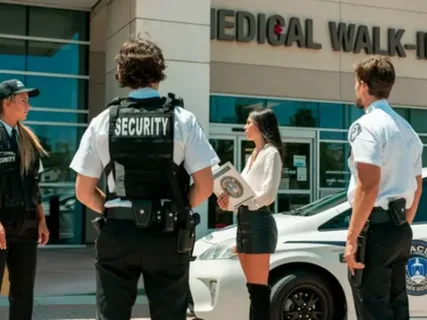
Effective Medical Facility Security involves more than placing a guard at an entrance. It can include access oversight, visible deterrence, observation, incident response, and security planning based on the facility’s layout and daily activity.
A thoughtful security plan should support patient care while helping staff and visitors feel safer throughout the property.
Why Medical Facility Security Matters
Healthcare facilities have unique security needs. Staff may work around the clock, visitors can arrive throughout the day, and certain rooms or areas may need controlled access.
Medical Facility Security can support healthcare properties through:
- Controlled entry monitoring
- Visible security presence
- Staff and visitor safety support
- Incident observation
- Response coordination
- Protection of restricted areas
The right coverage should match the facility rather than rely on a one-size-fits-all arrangement.
Security planning can also consider operating hours, entrance locations, parking areas, patient traffic, and areas that require additional oversight.
Strengthening Healthcare Security in Bowie
Medical offices, clinics, and healthcare properties in Bowie, MD can have different layouts and operating requirements. A security plan should account for how patients, employees, visitors, vendors, and emergency personnel move through the facility.
Healthcare security solutions in Bowie, MD can help create a more organized approach to access monitoring and on-site protection.
Evaluating Facility Security Needs
Before security coverage begins, it is useful to identify the areas and activities that require attention.
A facility assessment may consider:
- Main entrances and exits
- Reception and waiting areas
- Restricted rooms
- Employee-only areas
- Parking and exterior spaces
- Visitor movement
Understanding these factors helps determine where security personnel should be positioned and what responsibilities they should perform.
Managing Access and Visitor Activity
Controlled access can help healthcare facilities distinguish between public areas and restricted spaces.
Security personnel may assist with:
- Monitoring entrances
- Observing visitor activity
- Supporting access procedures
- Reporting unusual activity
- Maintaining a visible presence
The objective is to support a safer environment without unnecessarily interfering with normal healthcare operations.
Understanding the Medical Facility Security Process
Effective security starts with understanding the property and its daily operations. The approach should reflect the facility’s size, layout, operating schedule, and security concerns.
A typical planning process may include:
- Reviewing the facility and access points
- Identifying security-sensitive areas
- Understanding daily traffic patterns
- Establishing guard responsibilities
- Developing observation and response procedures
- Reviewing the coverage after implementation
Why Proper Medical Facility Security Planning Matters
Proper Medical Facility Security requires more than assigning personnel to a building. Guards need to understand their responsibilities, communication procedures, access requirements, and appropriate responses to incidents.
Stay Alert Security Services states that its guards are trained and certified and have experience across medical, commercial, government, retail, and residential environments.
A facility-specific plan can help security personnel maintain consistent coverage while working alongside healthcare staff.
Supporting Medical Facilities in Baltimore
Healthcare properties in Baltimore, MD may include medical offices, clinics, specialty facilities, and larger healthcare environments. Each setting can have different visitor volumes, access points, and operational requirements.
Medical security services in Baltimore, MD can support facilities that need an organized on-site security presence.
Protecting Staff, Patients, and Visitors
A healthcare security plan should consider everyone who enters the property.
Security personnel may help support:
- Entrance monitoring
- Visitor awareness
- Restricted-area oversight
- General property observation
- Incident documentation
A visible security presence can also help establish clear expectations around facility access and conduct.
Responding to Security Concerns
Security personnel should know how to recognize unusual activity and follow established response procedures.
Effective preparation may include:
- Clear communication channels
- Defined escalation procedures
- Incident documentation
- Coordination with facility management
- Appropriate emergency response
The exact responsibilities should be established before coverage begins so personnel understand how to respond when an issue occurs.
Common Healthcare Security Mistakes to Avoid
Security problems can develop when facilities overlook everyday access and operational details.
Common mistakes include:
- Leaving restricted areas poorly monitored
- Failing to define guard responsibilities
- Ignoring secondary entrances
- Not reviewing visitor procedures
- Using the same security plan for every facility
A security strategy should be reviewed when the facility changes its layout, operating schedule, or access requirements.
Choosing the Right Healthcare Security Provider
Selecting a security provider involves more than comparing coverage schedules. Healthcare environments require personnel who understand the importance of professionalism, communication, and appropriate conduct around patients and staff.
Facilities should consider:
- Security training and certification
- Experience with medical environments
- Communication procedures
- Access-control knowledge
- Incident reporting practices
- Ability to adapt coverage to the facility
Stay Alert Security Services says it provides security coverage across Bowie, Baltimore, Salisbury, and Washington, D.C., with guards experienced in medical and other commercial environments.
Conclusion
Healthcare facilities need security measures that protect people and property while supporting normal medical operations. A well-planned security strategy can address access points, visitor activity, restricted areas, and incident response based on the facility’s specific requirements.
Expert Medical Facility Security Service can help healthcare organizations establish a more organized security presence for patients, employees, visitors, and property.
Stay Alert Security Services provides trained security personnel for medical environments and other property types, with security planning that can be adapted to facility needs.
FAQs
What is Medical Facility Security?
Medical Facility Security involves security personnel and procedures designed to help protect patients, staff, visitors, property, and restricted areas within healthcare environments.
Why do medical facilities need dedicated security?
Healthcare facilities can have controlled areas, continuous activity, sensitive equipment, and significant visitor traffic. Dedicated security helps manage these considerations.
Can security guards monitor healthcare facility entrances?
Yes. Entrance monitoring can be part of a facility’s security plan, depending on its specific requirements and the responsibilities assigned to security personnel.
How can security personnel support healthcare staff?
Security personnel can monitor access points, observe activity, document incidents, and follow established procedures when security concerns arise.
Should every medical facility use the same security plan?
No. Facility layout, operating hours, visitor traffic, restricted areas, and security concerns can vary, so coverage should be planned around the individual property.