
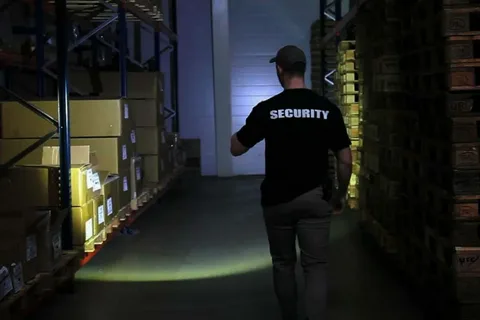
Warehouse Security Guards Company Ellicott City, MD
Learn how a warehouse security guards company can support safer access, inventory protection, loading areas, and daily operations for Ellicott City facilities.
Warehouses face security challenges that differ from those of ordinary commercial buildings. Large inventories, multiple entry points, loading docks, employee access, delivery schedules, and valuable equipment can create several areas that need attention. A warehouse security guards company in Ellicott City, MD can support these operations by providing a visible security presence and helping monitor activity throughout the property.
Effective warehouse security is not limited to watching the main entrance. It involves understanding how people, vehicles, inventory, and deliveries move through the facility.
Stay Alert Security Services focuses on warehouse security needs by helping businesses establish a structured approach to access control, patrols, monitoring, and incident response.
Why Warehouse Security Requires a Dedicated Approach
A warehouse security guards company in Ellicott City, MD can remain active for long hours, with employees arriving and leaving while vendors, delivery drivers, contractors, and visitors use different parts of the property.
This movement can make it difficult to recognize unusual activity without a consistent security process.
Security personnel can help monitor important areas such as:
- Employee entrances
- Visitor access points
- Loading docks
- Parking areas
- Storage zones
- Fenced perimeter areas
- Equipment and restricted spaces
- Delivery and receiving areas
The objective is not simply to watch people. It is to create greater awareness of what is happening across the property and identify situations that may require attention.
A visible security presence can also establish clearer expectations for visitors, employees, and contractors entering controlled areas.
Access Control and Visitor Management
Access control is one of the most important parts of warehouse security because not everyone entering a facility should necessarily have unrestricted access.
Employees may require access to specific areas based on their roles. Vendors and contractors may need temporary access. Delivery drivers may only need access to receiving areas.
A structured access process can help separate these different groups.
Security personnel can support procedures such as:
- Verifying authorized visitors
- Directing guests to appropriate areas
- Monitoring employee entrances
- Checking restricted access points
- Recording unusual access activity
- Supporting visitor sign-in procedures
- Monitoring after-hours entry
These practices can reduce confusion while making it easier to identify activity that falls outside normal warehouse operations.
Warehouse Security Guards Company Should Align With Facility Operations
A warehouse security guards company should understand that security cannot operate separately from the way a warehouse functions.
Loading schedules, shift changes, delivery windows, employee parking, and contractor activity can all affect security requirements.
For example, the loading dock may experience significantly more activity during certain hours. Security coverage may therefore need greater attention during periods when deliveries and employee movements overlap.
The same principle applies to shift changes. A large number of employees entering or leaving at once can create a temporary increase in activity around entrances and parking areas.
Security planning should reflect these operational patterns instead of applying the same level of attention to every part of the property at all times.
Protecting Inventory Through Better Site Awareness
Inventory protection involves more than preventing unauthorized entry. Security personnel can also help identify unusual activity within the facility.
A consistent presence may help businesses notice issues such as unauthorized access to restricted areas, unusual vehicle activity, unsecured doors, or activity outside normal operating patterns.
Warehouse layout also matters. Large storage areas can create visibility challenges, particularly where shelving blocks direct lines of sight.
Regular patrols can help address areas that are not continuously visible from a fixed security position.
Security procedures should also complement existing inventory controls. Access records, surveillance systems, employee procedures, and physical security measures can work together to create a more complete security environment.
Warehouse Security Services Near Me in Upper Marlboro, MD
Businesses searching for warehouse security services near me in Upper Marlboro, MD should evaluate their facility’s specific operating conditions rather than choosing security coverage based only on building size.
Two warehouses with similar square footage may have very different security needs. One may have frequent overnight deliveries, while another may operate primarily during daytime shifts. One may store high-value products, while another may have extensive outdoor storage or multiple vehicle entrances.
A security assessment should consider:
- Facility size and layout
- Number of entrances
- Employee shifts
- Delivery frequency
- Visitor volume
- Outdoor storage
- Parking areas
- Lighting conditions
- Restricted areas
- Operating hours
This information can help determine where security attention provides the greatest practical value.
Security Personnel and Technology Work Best Together
Technology can provide valuable information, but physical security personnel can respond to situations that cameras and automated systems cannot handle independently.
| Security Measure | Primary Function | Practical Role |
| Security Guards | Physical presence and observation | Monitor activity and respond to concerns |
| Cameras | Visual documentation | Record and review activity |
| Access Control | Entry management | Limit access to authorized areas |
| Lighting | Visibility | Improve observation around the property |
| Alarm Systems | Alert generation | Notify personnel of specific events |
These measures can complement each other. Cameras may identify activity, while a security professional can investigate according to established procedures. Access control can restrict entry, while guards can help manage visitors and unusual situations.
Operational Security Gaps to Avoid
A common security weakness occurs when businesses focus heavily on the main entrance while overlooking other access points.
Loading docks, emergency exits, side doors, fencing, and parking areas may also require attention.
Another issue is inconsistent visitor management. When employees and contractors follow different procedures from one shift to another, it becomes harder to maintain clear access records.
Poor communication can create another vulnerability. Security personnel should understand who is authorized to make operational decisions and how unusual incidents should be reported.
Businesses should also review security procedures when operations change. New shifts, expanded storage, construction work, additional entrances, or changes in delivery schedules can alter the property’s security requirements.
Affordable Warehouse Security Systems and Physical Security
Businesses researching affordable warehouse security systems may focus primarily on equipment costs. However, technology should be evaluated according to the actual risks and operating conditions of the facility.
A large number of cameras does not automatically create better security if important areas remain poorly covered or nobody consistently reviews relevant activity.
Similarly, an access control system may not address visitor management, perimeter concerns, or after-hours activity on its own.
A balanced approach considers technology, physical security, employee procedures, lighting, access control, and incident reporting as connected parts of the overall security plan.
Security Practices for Long-Term Warehouse Protection
Effective warehouse security requires regular review rather than a one-time setup.
Businesses should periodically examine whether entrances remain properly controlled, whether restricted areas are clearly identified, and whether security procedures still match current operations.
Incident records can also provide useful information. Repeated issues around a specific entrance, loading area, or shift may indicate that the current security approach needs adjustment.
Employee communication matters as well. Workers should understand access procedures, visitor policies, and the appropriate process for reporting suspicious activity.
Security works best when it becomes part of normal warehouse operations rather than an isolated task.
Conclusion
An affordable warehouse security system can provide an important layer of protection for facilities managing inventory, employees, visitors, deliveries, and valuable equipment. Effective warehouse security combines physical presence, access management, site awareness, technology, and clearly defined operating procedures.
For facilities in Ellicott City and Upper Marlboro, the right approach should reflect the property’s layout, operating schedule, access points, inventory, and daily activity. Stay Alert Security Services supports warehouse security planning with attention to the practical conditions that influence how a facility operates and where security coverage matters most.
FAQ
What does warehouse security typically include?
Warehouse security may include access monitoring, visitor management, patrols, loading dock observation, perimeter checks, incident reporting, and monitoring of restricted areas.
Why are loading docks important to warehouse security?
Loading docks often experience frequent movement involving employees, drivers, vendors, and contractors. Their activity can make controlled access and consistent observation particularly important.
Can security guards work alongside warehouse camera systems?
Yes. Guards and surveillance technology can complement each other. Cameras provide visual information and documentation, while security personnel can monitor activity and respond according to established procedures.
How should a warehouse determine its security needs?
Businesses should consider facility layout, operating hours, employee shifts, delivery activity, visitor volume, inventory value, access points, outdoor areas, and existing security technology.
Are security procedures necessary if a warehouse already has an alarm system?
Yes. An alarm can alert personnel to a specific event, but it does not replace access management, visitor control, physical observation, or established incident procedures.